A weekly meal box sounds simple: the customer signs up once, you charge them every week, and dinner arrives on schedule. Behind the checkout, though, several things have to agree—the payment gateway, the subscription schedule, the delivery rules, and whoever’s packing the food.
Recurring billing is only one part of that arrangement. A successful WooCommerce subscription setup also gives customers clear renewal terms, handles failed payments sensibly, and creates orders your team can actually fulfill. Get those pieces working together before you start selling, not after the first batch of renewals.
How WooCommerce subscriptions work—and when to use them
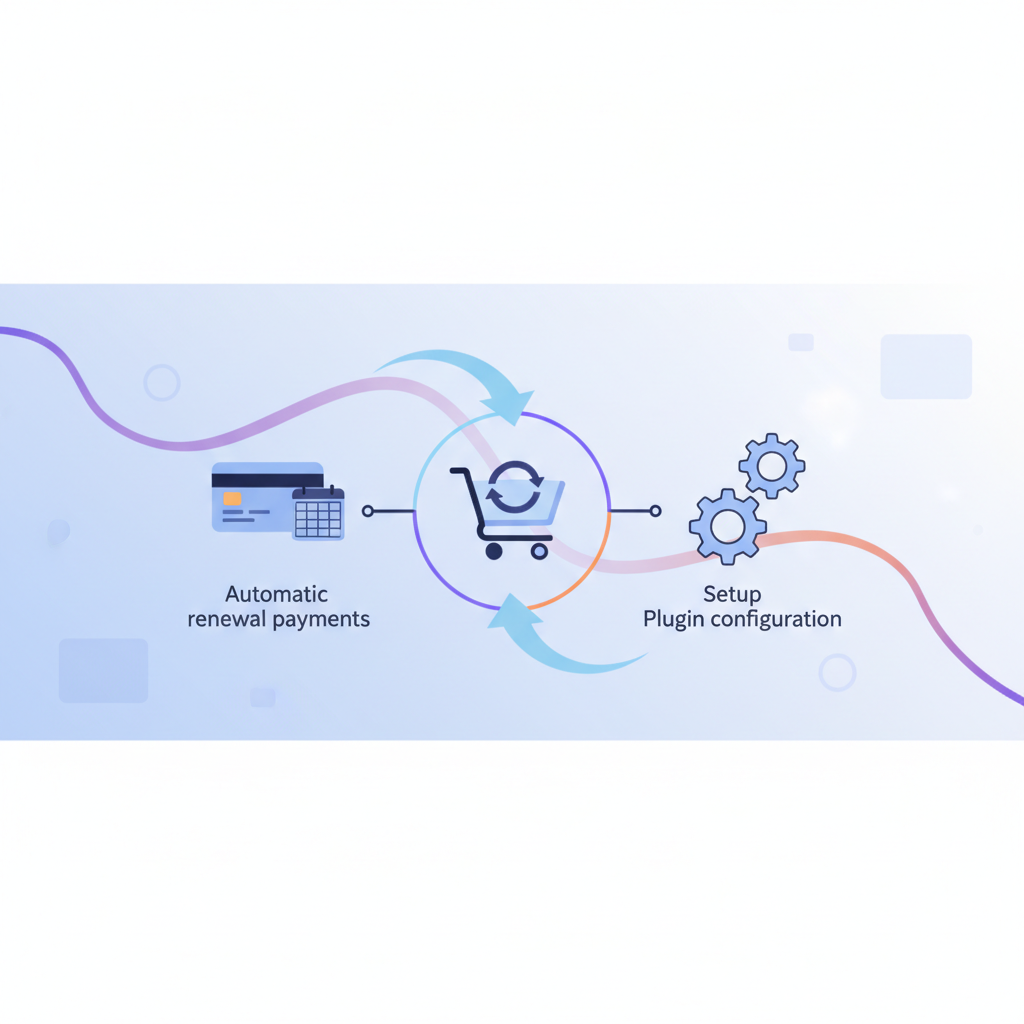
A subscription is an ongoing agreement to charge a customer at a defined interval for a product or service. Instead of placing a fresh order each time, the customer authorizes recurring purchases during signup. Depending on the payment method and configuration, renewals happen automatically or require the customer to pay a renewal invoice.
For example, a restaurant might sell a $48 weekly meal box, a coffee roaster might ship beans every month, and a specialist retailer might offer a monthly selection of pantry products. The common thread is predictable repetition—not necessarily identical contents.
Subscriptions work best when customers regularly need what you sell and your business can reliably deliver it. They’re less forgiving when stock availability, delivery capacity, or product costs change unpredictably. A fixed weekly price needs enough margin to survive an expensive ingredient week.
Subscriptions, memberships, and installments aren’t interchangeable
A one-time purchase creates a single buying commitment. A subscription keeps renewing until its scheduled end or cancellation, subject to the terms you’ve set. A membership controls access or benefits, such as exclusive menus or discounted delivery; it can be paid once or supported by a subscription.
An installment plan splits a defined total into multiple payments. Selling a $600 package in six payments is different from selling an ongoing $100 monthly subscription, even if the first six charges look identical. The contractual commitment and cancellation rules differ.
Core WooCommerce does not include a complete subscription-management system. It handles products, checkout, payments, and orders, but recurring schedules and subscription lifecycle management require an extension or another compatible implementation.
Also, storing a customer’s card through a gateway doesn’t automatically create recurring billing. The subscription system still needs to know when to charge, how much to collect, and what to do when that charge fails.
Choose a subscription plugin and check payment compatibility
The setup below describes the paid WooCommerce Subscriptions extension, as specified for this walkthrough. Its product types and administration screens provide the reference implementation; other extensions may use different settings or handle renewals differently. Don’t transfer these instructions blindly between plugins.
Before committing to any subscription implementation, compare your actual business rules with its current documentation. “Supports subscriptions” is too broad to be a useful compatibility check.
- Billing schedules: Confirm that your intended interval, fixed duration, trial, and any synchronized billing requirements are supported.
- Renewal payments: Check automatic recurring billing support for the exact gateway extension and payment method—not just the payment provider’s name.
- Customer controls: Verify cancellation, payment-method changes, and any suspension or product-switching behavior you need.
- Checkout compatibility: Check support for your active checkout, including the Checkout block or classic checkout, plus express-payment buttons and custom fields.
- Store compatibility: Review current WordPress, WooCommerce, PHP, and High-Performance Order Storage requirements where applicable.
Automatic renewals require a gateway integration that supports subscription payments and is configured correctly. Support can differ between cards, wallets, and local payment methods offered through the same provider. An integration may also support recurring charges without supporting every subscription change.
If Stripe is already part of your payment stack, use the site’s Stripe setup tutorial search to find the relevant setup guidance rather than rebuilding the gateway configuration here. Then check the installed gateway’s current subscription compatibility, saved-payment requirements, and webhook configuration.
Expect separate costs: the subscription extension’s license, payment-processing fees, and potentially additional functionality. Recurring billing doesn’t remove transaction fees. Nor does it guarantee every off-session payment will succeed; expired cards, insufficient funds, and authentication requirements still happen.
Finally, distinguish automatic renewals from manual renewals. With manual renewal, the customer returns to pay. That can suit some businesses, but it isn’t the same experience as an automatically charged weekly meal plan. Make the difference explicit before customers subscribe.
Create your first subscription product step by step
1. Install and activate the extension safely
Start with a backup and an isolated test environment. Upload your licensed extension ZIP through Plugins → Add New → Upload Plugin, activate it, and complete any required license or update connection. Check for compatibility notices before creating products.
Configure the payment gateway in sandbox or test mode for this environment. Use test credentials and supported test payment details—not a real customer card.
2. Create a simple subscription
Go to Products → Add New and create “Weekly Dinner Box—Four Meals.” In the Product data selector, choose Simple subscription. This suits a single plan with one price; a Variable subscription can be useful when customers choose between differently priced subscription options.
For this example, set the subscription price to $48, the interval to every one week, and the expiration setting to no automatic end. Labels can vary slightly by installed version. The intended result is an ongoing $48 weekly subscription, before any separately configured shipping or applicable taxes.
If you’re selling a fixed six-week program instead, configure a supported finite duration and test the resulting payment schedule. Don’t assume a duration label always means exactly the number of charges you have in mind, especially when trials or synchronized billing are involved.
3. Configure the physical product details
A delivered meal box is not virtual. Leave the Virtual option unchecked and add the shipping information your rate calculations require, such as weight, dimensions, and shipping class. Set its tax treatment according to your jurisdiction and product type.
Be careful with stock management. Your signup capacity and your kitchen’s weekly production capacity aren’t necessarily the same thing. Test how renewal orders affect stock, and decide who adjusts availability when the kitchen reaches its limit.
4. Publish clear renewal terms
Put the recurring price, frequency, delivery charge, cancellation rules, and first-delivery timing in the product description and relevant checkout disclosures. For example: “$48 every week, plus $5 delivery per shipment. Your first box ships on the next eligible Wednesday.” Any deadline affecting that promise needs to be stated too.
Don’t describe a plan as “cancel anytime” if an already-paid box can’t be stopped after the kitchen cutoff. Explain the difference between stopping future renewals and changing an order already in preparation.
5. Use trials and signup fees deliberately
WooCommerce Subscriptions provides free-trial and signup-fee settings. A trial can make sense for a service, but physical food isn’t free to produce. Decide whether anything ships before the first recurring payment, and verify any shipping or tax charged at signup.
A signup fee might cover a clearly disclosed starter kit. Don’t use it to conceal an expensive first payment behind a low recurring headline. Preview the product, cart, and checkout to verify the first amount due and subsequent renewal amount.
[IMAGE: WooCommerce simple subscription product editor showing a $48 weekly meal box, weekly billing interval, no automatic expiration, and physical-product shipping settings]
Plan delivery, shipping charges, and order fulfillment
The cleanest starting point is one successful weekly payment leading to one weekly shipment. Payment frequency and fulfillment frequency match, so renewal orders can serve as a straightforward production queue.
Monthly billing with weekly deliveries is a different arrangement. One monthly renewal order doesn’t automatically become four or five weekly kitchen tickets. You need a separate fulfillment schedule, supporting integration, or controlled administrative workflow to generate and track each delivery.
Calendar months also don’t contain a fixed number of weeks. Decide whether you’re selling a specified number of boxes per billing period or deliveries on every scheduled weekday during that month. Those promises have different costs.
Check the first shipment and every recurring shipment
Verify shipping totals in the initial checkout and on a generated renewal order. WooCommerce Subscriptions can support one-time shipping configurations, but a regular delivery plan usually needs a delivery charge on each relevant renewal.
For the example above, the expected charge is $53 each week before applicable tax: $48 for meals and $5 for delivery. If checkout shows $53 but renewals show $48, investigate before publishing. Also test free-shipping thresholds, coupons, and mixed carts containing both subscription and one-time products.
Don’t assume changing a shipping-zone rate automatically reprices all existing subscriptions. Existing agreements retain subscription-specific totals; any price update needs a supported process and appropriate customer notice.
Turn restaurant policies into operating rules
Set a menu-selection deadline that gives the kitchen enough preparation time. A Wednesday delivery might require choices by Monday afternoon. Define what happens when someone misses the deadline: a default box, a supported skip process, or staff follow-up.
Check delivery eligibility at signup and when a customer changes address. Document holiday interruptions, unavailable ingredients, and whether customers can pause deliveries without changing their billing schedule. A fulfillment pause and a billing suspension are not automatically the same thing.
For a restaurant already handling pickup, delivery, or dine-in orders, FoodMaster’s WooCommerce restaurant ordering system brings POS, kitchen display, QR table ordering, and automatic printing into the wider ordering operation. Subscription renewals still need their own integration checks; those restaurant features don’t establish subscription compatibility by themselves.
Confirm that renewal orders contain the delivery details, modifiers, and kitchen instructions your workflow needs. Test whether the kitchen display and printer receive them at the correct status—and only once. A paid order sitting invisibly in the dashboard is not a fulfilled dinner.
Manage renewals, failed payments, and customer changes
Think of the subscription as the ongoing agreement and its related orders as individual transactions. A typical paid signup creates an initial order and a subscription record. Subsequent billing cycles create renewal orders connected to that subscription.
This distinction matters during support. Editing one order doesn’t necessarily change future subscription totals, addresses, or billing behavior. Check the subscription record as well as the order the customer is asking about.
Customer and administrator controls
Customers can view their subscriptions through My Account when account pages and endpoints are configured correctly. Available actions depend on subscription status, store settings, and gateway capabilities. These may include cancellation, supported payment-method changes, and suspension where allowed.
Administrators manage records through WooCommerce → Subscriptions. When updating an address, confirm whether it applies to the ongoing subscription, an already-created renewal order, or both. Kitchen tickets already printed won’t magically update because someone changed their account details.
For payment updates, direct customers through the supported account workflow. Never ask them to email card details. Also verify that changing a saved payment method updates the intended subscription; adding a new card to an account isn’t always the same action.
Cancellation can involve a pending-cancellation period through the end of the prepaid term. Check the effective status and remaining fulfillment obligations rather than treating every cancellation request as “stop everything immediately.”
Failed payments and renewal communication
WooCommerce Subscriptions includes a failed recurring-payment retry system for supported automatic-payment configurations. Check whether it’s enabled and applicable to your gateway. Some failures require customer action and won’t be solved by repeated charging attempts.
Review enabled subscription-related emails, recipients, and wording. Test payment receipts, failed-payment messages, and cancellation communication. If you need advance renewal reminders, verify what your installed version and configuration actually provide; don’t assume every reminder exists by default.
For food orders, decide whether preparation waits for successful payment. Otherwise, an unpaid renewal can become a very real box of perishable inventory.
Refunds are separate from cancellation
Refunding an order and stopping future billing are separate actions. If a customer requests a refund and cancellation, process each through the supported workflow and verify both outcomes.
Confirm that the refund reached the gateway rather than merely being recorded manually in WooCommerce. Then check the subscription status and next-payment behavior. A partial goodwill refund for one late delivery shouldn’t accidentally change every future charge—or leave a requested cancellation unfinished.
[IMAGE: Subscription lifecycle diagram connecting an initial order and weekly renewal orders to one subscription, with separate branches for failed-payment recovery, cancellation, refund, and kitchen fulfillment]
Test the subscription lifecycle before accepting customers
A successful checkout proves only that signup works. Renewals run without the customer sitting at checkout, which introduces different payment, scheduling, and fulfillment conditions.
Use an isolated environment following the relevant guidance in the site’s WordPress staging tutorials. WooCommerce Subscriptions has staging safeguards, but don’t rely on them alone: verify staging mode, test gateway credentials, webhook destinations, and disabled production fulfillment connections.
Never enable live recurring charges on a staging copy. A copied database may contain real subscription records, customer information, and gateway references. Keep it access-restricted and prevent unintended customer emails.
- Sandbox signup: Buy the meal box with supported test payment details. Check the initial order, subscription status, tax, shipping, and account access.
- Renewal: Follow the installed extension’s documented testing procedure or supported renewal-processing action. Confirm the renewal order, amount, payment result, and next billing schedule. Simply editing dates is not a complete test.
- Payment failure: Use the gateway’s documented recurring-payment failure simulation. Check order status, retry behavior, customer notices, and successful recovery.
- Customer changes: Test payment-method updates, address changes, cancellation, and suspension if offered. Verify future billing and existing orders separately.
- Email delivery: Inspect actual delivered messages, not just enabled settings. Use the site’s WooCommerce email-troubleshooting tutorials if receipts or notices don’t arrive.
- Fulfillment handoff: Confirm a paid renewal reaches the correct delivery queue, kitchen screen, and printer, without duplicates or missing instructions.
WooCommerce Subscriptions uses scheduled actions for renewal-related work. Action Scheduler’s processing commonly depends on WP-Cron, which normally runs when WordPress receives requests. Low traffic or blocked background requests can delay processing.
Inspect WooCommerce → Status → Scheduled Actions for overdue or failed work. Ask your host about a properly configured server-side cron arrangement when dependable background processing is needed, and investigate errors before rerunning payment-related actions.
Start with one plan, one delivery schedule, and clear cancellation terms. Expand only after you’ve watched the whole cycle work: signup, renewal, payment recovery, and food reaching the customer. That’s when recurring revenue becomes an operation you can trust.
Commission-free ordering
Run restaurant orders on your own WordPress site
FoodMaster adds delivery, pickup, dine-in, POS, and kitchen tools — with zero per-order fees.